SLEEP TIPS for BETTER SLEEP
Relaxation / More Comfort / Better Sleep
If you have sleep challenges, this information may be useful. Ask your doctor about medications such as prazosin which have been recommended by the VA / DoD and if it is appropriate for you to be evaluated by a sleep study to determine your specific challenges.
Walter Reed Army Medical Center Good Sleep Hygiene Handout
1. Maintain a regular bedtime and awakening time schedule including weekends. Get up about the same time every day, regardless of what time you fell asleep.
2. Establish a regular, relaxing bedtime routine. Relaxing rituals prior to bedtime many include a warm bath or shower, aroma therapy, reading, or listening to soothing music.
3. Sleep in a room that is dark, quiet, comfortable, and cool; sleep on comfortable mattress and pillows.
4. Use your bedroom only for sleep and sex. Have work materials, computers, and TVs in another room.
5. Finish eating at least 2-3 hours prior to your regular bedtime.
6. Avoid caffeine within 6 hours; alcohol & smoking within 2 hours of bedtime.
7. Exercise regularly; finish a few hours before bedtime.
8. Avoid naps.
9. Go to bed only when sleepy. Lay in bed only for sleeping, not for work or watching TV.
10. Designate another time to write down problems & possible solutions in the late afternoon or early evening, not close to bedtime.
11. After 10-15 minutes of not being able to get to sleep, go to another room to read or watch TV until sleepy.
1. Maintain a regular bedtime and awakening time schedule including weekends. Get up about the same time every day, regardless of what time you fell asleep.
2. Establish a regular, relaxing bedtime routine. Relaxing rituals prior to bedtime many include a warm bath or shower, aroma therapy, reading, or listening to soothing music.
3. Sleep in a room that is dark, quiet, comfortable, and cool; sleep on comfortable mattress and pillows.
4. Use your bedroom only for sleep and sex. Have work materials, computers, and TVs in another room.
5. Finish eating at least 2-3 hours prior to your regular bedtime.
6. Avoid caffeine within 6 hours; alcohol & smoking within 2 hours of bedtime.
7. Exercise regularly; finish a few hours before bedtime.
8. Avoid naps.
9. Go to bed only when sleepy. Lay in bed only for sleeping, not for work or watching TV.
10. Designate another time to write down problems & possible solutions in the late afternoon or early evening, not close to bedtime.
11. After 10-15 minutes of not being able to get to sleep, go to another room to read or watch TV until sleepy.
Want a Good Night’s Sleep?
By Dr. Joseph Mercola, MD
Mercola.com October 2, 2010
Optimizing Your Sleep Sanctuary
1. Sleep in complete darkness, or as close to it as possible.
2. Keep the temperature in your bedroom no higher than 70 degrees F.
3. Check your bedroom for electro-magnetic fields (EMFs).
4. Move alarm clocks and other electrical devices away from your bed.
5. Avoid using loud alarm clocks.
6. Reserve your bed for sleeping.
7. Consider separate bedrooms.
Preparing for Bed
8. Get to bed as early as possible.
9. Don't change your bedtime.
10. Establish a bedtime routine.
11. Don't drink any fluids within 2 hours of going to bed.
12. Go to the bathroom right before bed.
13. Eat a high-protein snack several hours before bed.
14. Also eat a small piece of fruit.
15. Avoid before-bed snacks, particularly grains and sugars.
16. Take a hot bath, shower or sauna before bed.
17. Wear socks to bed.
18. Wear an eye mask to block out light.
19. Put your work away at least one hour before bed (preferably two hours or more).
20. No TV right before bed.
21. Listen to relaxation CDs.
22. Read something spiritual or uplifting.
23. Journaling.
Lifestyle Suggestions That Enhance Sleep
24. Reduce or avoid as many drugs as possible.
25. Avoid caffeine.
26. Avoid alcohol.
27. Make certain you are exercising regularly.
28. Lose excess weight.
29. Avoid foods you may be sensitive to.
30. Have your adrenals checked by a good natural medicine clinician.
31. If you are menopausal or perimenopausal, get checked out by a good natural medicine physician.
If All Else Fails
32. My current favorite fix for insomnia is Emotional Freedom Technique (EFT).
33. Increase your melatonin
By Dr. Joseph Mercola, MD
Mercola.com October 2, 2010
Optimizing Your Sleep Sanctuary
1. Sleep in complete darkness, or as close to it as possible.
2. Keep the temperature in your bedroom no higher than 70 degrees F.
3. Check your bedroom for electro-magnetic fields (EMFs).
4. Move alarm clocks and other electrical devices away from your bed.
5. Avoid using loud alarm clocks.
6. Reserve your bed for sleeping.
7. Consider separate bedrooms.
Preparing for Bed
8. Get to bed as early as possible.
9. Don't change your bedtime.
10. Establish a bedtime routine.
11. Don't drink any fluids within 2 hours of going to bed.
12. Go to the bathroom right before bed.
13. Eat a high-protein snack several hours before bed.
14. Also eat a small piece of fruit.
15. Avoid before-bed snacks, particularly grains and sugars.
16. Take a hot bath, shower or sauna before bed.
17. Wear socks to bed.
18. Wear an eye mask to block out light.
19. Put your work away at least one hour before bed (preferably two hours or more).
20. No TV right before bed.
21. Listen to relaxation CDs.
22. Read something spiritual or uplifting.
23. Journaling.
Lifestyle Suggestions That Enhance Sleep
24. Reduce or avoid as many drugs as possible.
25. Avoid caffeine.
26. Avoid alcohol.
27. Make certain you are exercising regularly.
28. Lose excess weight.
29. Avoid foods you may be sensitive to.
30. Have your adrenals checked by a good natural medicine clinician.
31. If you are menopausal or perimenopausal, get checked out by a good natural medicine physician.
If All Else Fails
32. My current favorite fix for insomnia is Emotional Freedom Technique (EFT).
33. Increase your melatonin
Sleeping With Back Pain
by WebMD.com
by WebMD.com
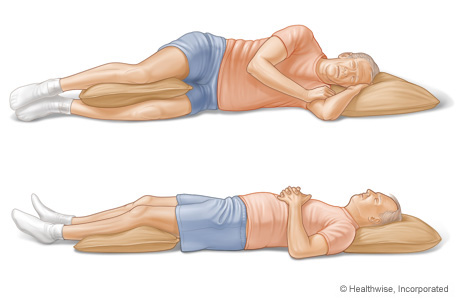
Sleeping can be hard when your back aches. You toss and turn, and it hurts.
Try to sleep with your back in a neutral position-not arched a lot, but not flat either. This takes pressure off your spine. These two positions can help:
Many people find that these positions work for them, but they may not work for you. Find the position that helps you the most.
If you have a very soft mattress, you may be more comfortable if you sleep on the floor.
To rise from bed:
Regardless of the cause, if insomnia persists for more than a few weeks, it is important to consult a doctor who may schedule you for a medical evaluation and/or sleep study.
7 Reasons to Try Sleeping on Your Left Side
by John Douillard, June 27, 2013
Here are some of Ayurveda’s reasons for recommending the left side for sleep.
Try to sleep with your back in a neutral position-not arched a lot, but not flat either. This takes pressure off your spine. These two positions can help:
- When sleeping on your side, place a pillow between your knees. Try to keep your top leg from falling over your bottom leg. You also can put a small, rolled-up towel under your waist.
- When sleeping on your back, place a pillow under your knees. You also can put a small, rolled-up towel under the curve of your back.
Many people find that these positions work for them, but they may not work for you. Find the position that helps you the most.
If you have a very soft mattress, you may be more comfortable if you sleep on the floor.
To rise from bed:
- Roll onto your side and bend both knees.
- Drop your feet over the side of the bed as you push with both arms to sit up.
- Scoot to the edge of the bed and position your feet under your buttocks.
- Stand up, keeping your back in the neutral position.
Regardless of the cause, if insomnia persists for more than a few weeks, it is important to consult a doctor who may schedule you for a medical evaluation and/or sleep study.
7 Reasons to Try Sleeping on Your Left Side
by John Douillard, June 27, 2013
Here are some of Ayurveda’s reasons for recommending the left side for sleep.
- Facilitate lymphatic drainage
- Makes it easier for the heart to pump “downhill”
- Better elimination
- Support healthy spleen function
- Encourages proper digestion
- Helps circulation back to the heart
- Helps bile flow more freely
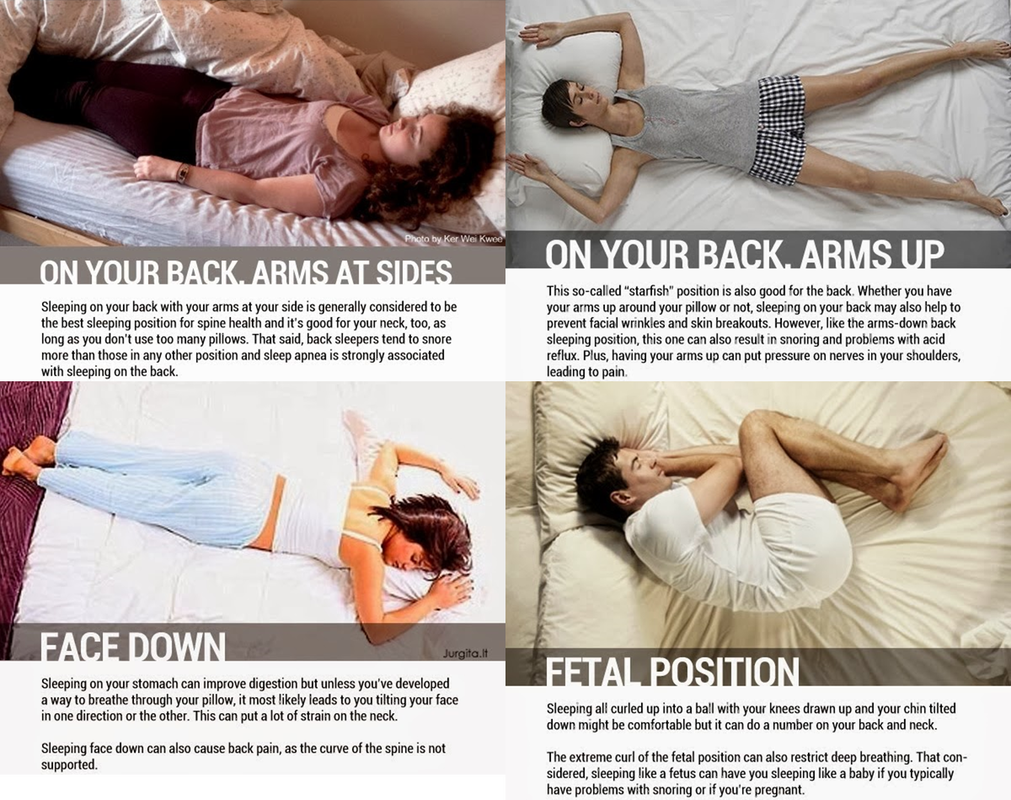
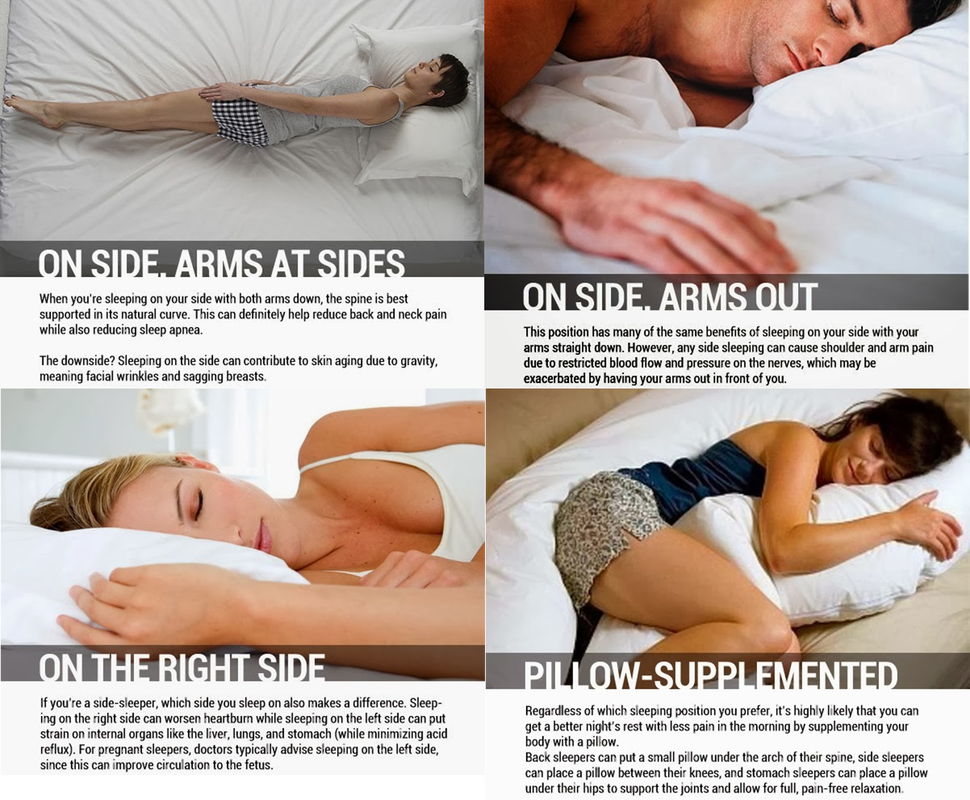
8 Sleeping Positions and Their Effects On Health
October 26, 2013
Other Links and Background Information
(Click on the blue links for more information.)
SLEEP HYGIENE Helpful Hints to Help You Sleep
Sleep Disorders Center, University of Maryland Medical Center
SLEEP
INSOMNIA
SLEEP APNEA
Medical Disclaimer
Information contained within this webpage is intended solely for educational purposes and is neither intended nor implied to be a substitute for professional medical advice relative to your specific medical condition or question. Always seek the advice of your physician or other health care provider for any questions you may have regarding your medical condition. Only your physician can provide specific diagnoses and therapies. By reading this webpage, you agree to this Medical Disclaimer.
(Click on the blue links for more information.)
SLEEP HYGIENE Helpful Hints to Help You Sleep
Sleep Disorders Center, University of Maryland Medical Center
SLEEP
INSOMNIA
SLEEP APNEA
Medical Disclaimer
Information contained within this webpage is intended solely for educational purposes and is neither intended nor implied to be a substitute for professional medical advice relative to your specific medical condition or question. Always seek the advice of your physician or other health care provider for any questions you may have regarding your medical condition. Only your physician can provide specific diagnoses and therapies. By reading this webpage, you agree to this Medical Disclaimer.
The statements found within these pages have not been evaluated by the Food and Drug Administration. If a product or treatment is mentioned or recommended in these pages, it is not intended to diagnose, treat, cure, or prevent any disease. The information contained herein is meant to be used to educate the reader and is in no way intended to provide individual medical advice. Medical advice must only be obtained from a qualified health practitioner. BeneSol, LLC assumes no responsibility for the use or misuse of this material.
Your use of this website indicates your agreement to these terms. All trademarks, registered trademarks and servicemarks mentioned on this site are the property of their respective owners.
This site is owned by BeneSol, LLC © 2012, 2019 All Rights Reserved.
Your use of this website indicates your agreement to these terms. All trademarks, registered trademarks and servicemarks mentioned on this site are the property of their respective owners.
This site is owned by BeneSol, LLC © 2012, 2019 All Rights Reserved.